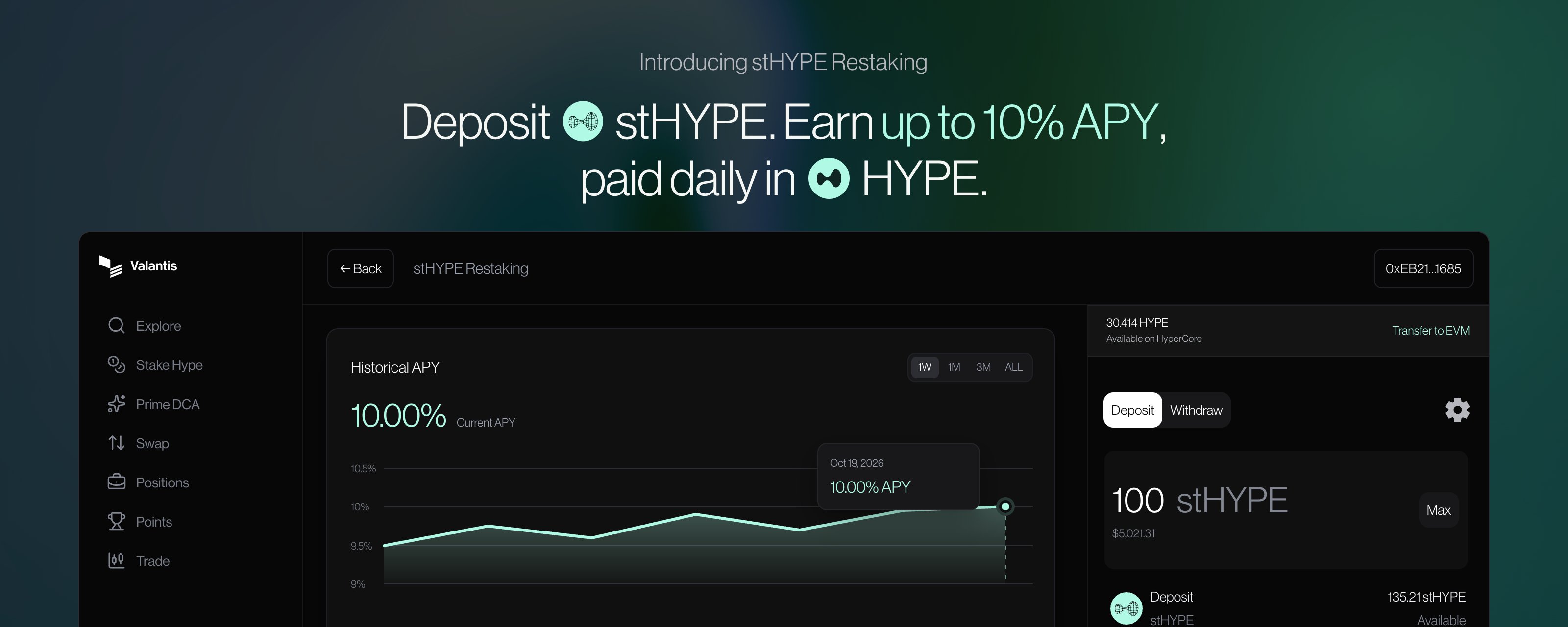

Liquid staking lets you earn staking rewards while holding a token you can sell to skip the unstaking wait. So when you want HYPE back instantly, how much do you actually receive?
We compared stHYPE and kHYPE from 1 to 21 October. Here, “peg” means a token’s swap value relative to the HYPE backing it, including swap costs. The comparison uses the cost of selling 100 stHYPE and 100 kHYPE, adjusted for each token’s redemption value.
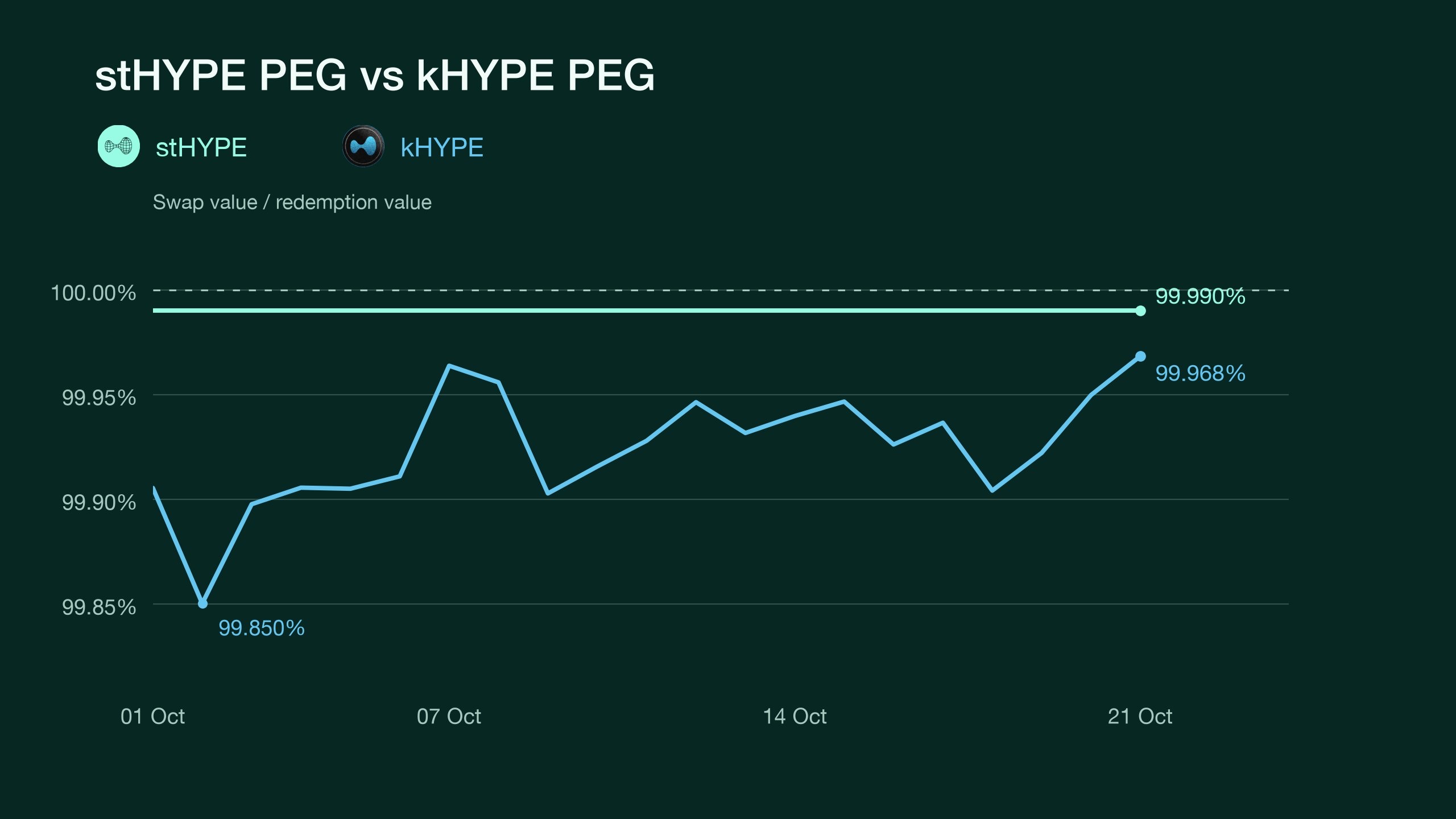
stHYPE stayed close to its peg
| Selling the LST for HYPE | stHYPE | kHYPE |
|---|---|---|
| Median loss | −0.010% | −0.078% |
| Largest trade below peg | −0.020% | −0.344% |
kHYPE’s median loss was almost eight times larger. Across the period, selling stHYPE for HYPE consistently returned a better rate than selling kHYPE, sometimes by an order of magnitude. Why?
Liquidity
stHYPE is currently about 20% the size of kHYPE. To see how much capital is available for holders to trade against, and for lending markets to liquidate into, we compared each token’s DEX liquidity with its TVL.
- stHYPE: 36,000 HYPE of tracked DEX liquidity against 2.2M HYPE of TVL, a ratio of 1.65%.
- kHYPE: 112,700 HYPE against 10.6M HYPE, a ratio of 1.06%.
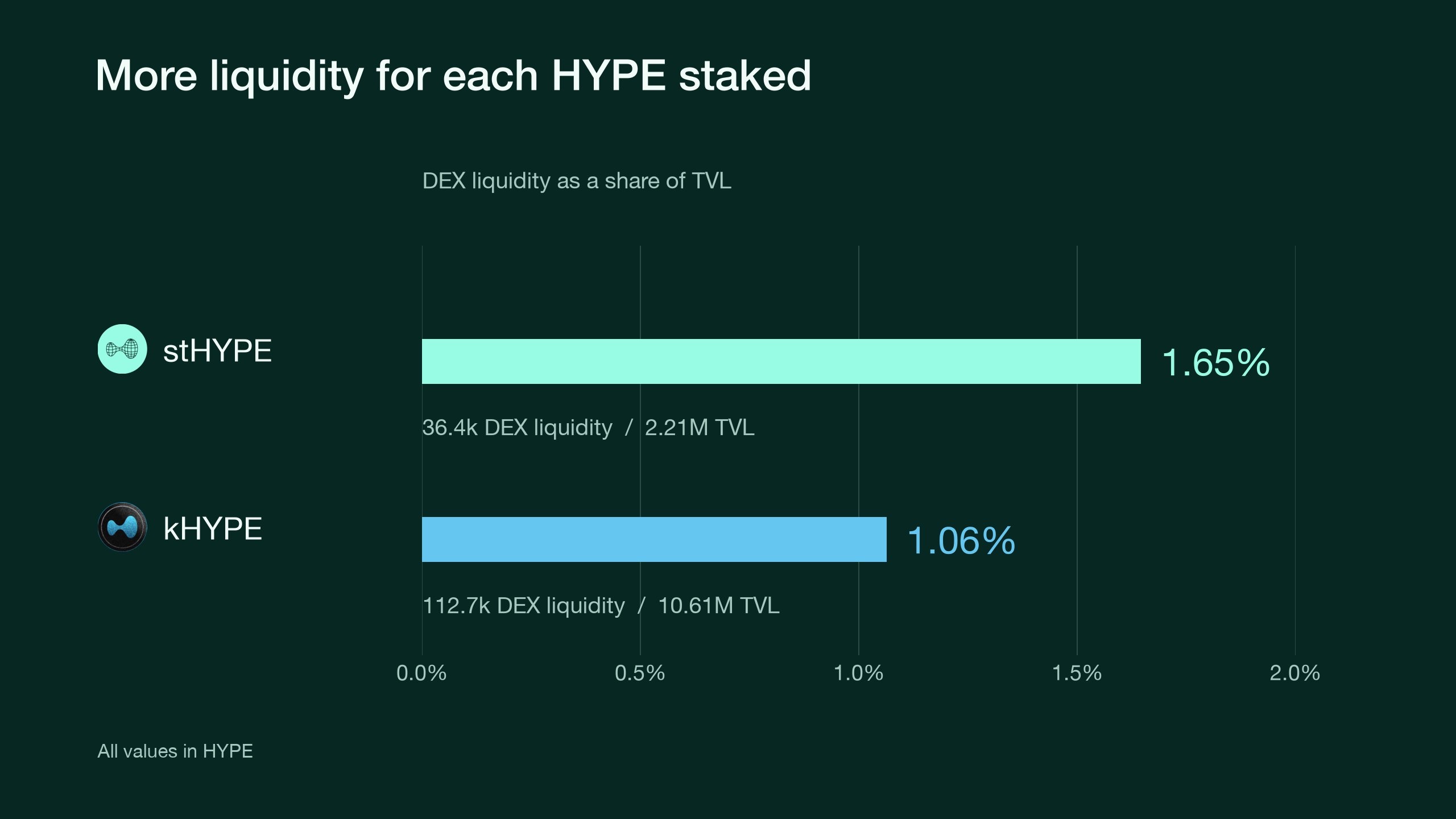
Neither ratio is large. But most of stHYPE’s instant redemptions happen on the primary market, through the protocol’s instant redemption queue. During the period, the stHYPE Protocol processed 44,444 HYPE of zero-fee instant redemptions, entirely outside DEX liquidity. We believe this is a main reason stHYPE holds a tighter peg on AMMs.
kHYPE also offers in-protocol liquidity, with a 10 bps fee on kHYPE redemptions. The usage and depth of those redemptions are not published, so this study does not track them.
On AMM liquidity alone, kHYPE has more in absolute terms, while stHYPE has about 55% more relative to its size. Dig deeper, though, and not all liquidity is equal.
Where the liquidity is
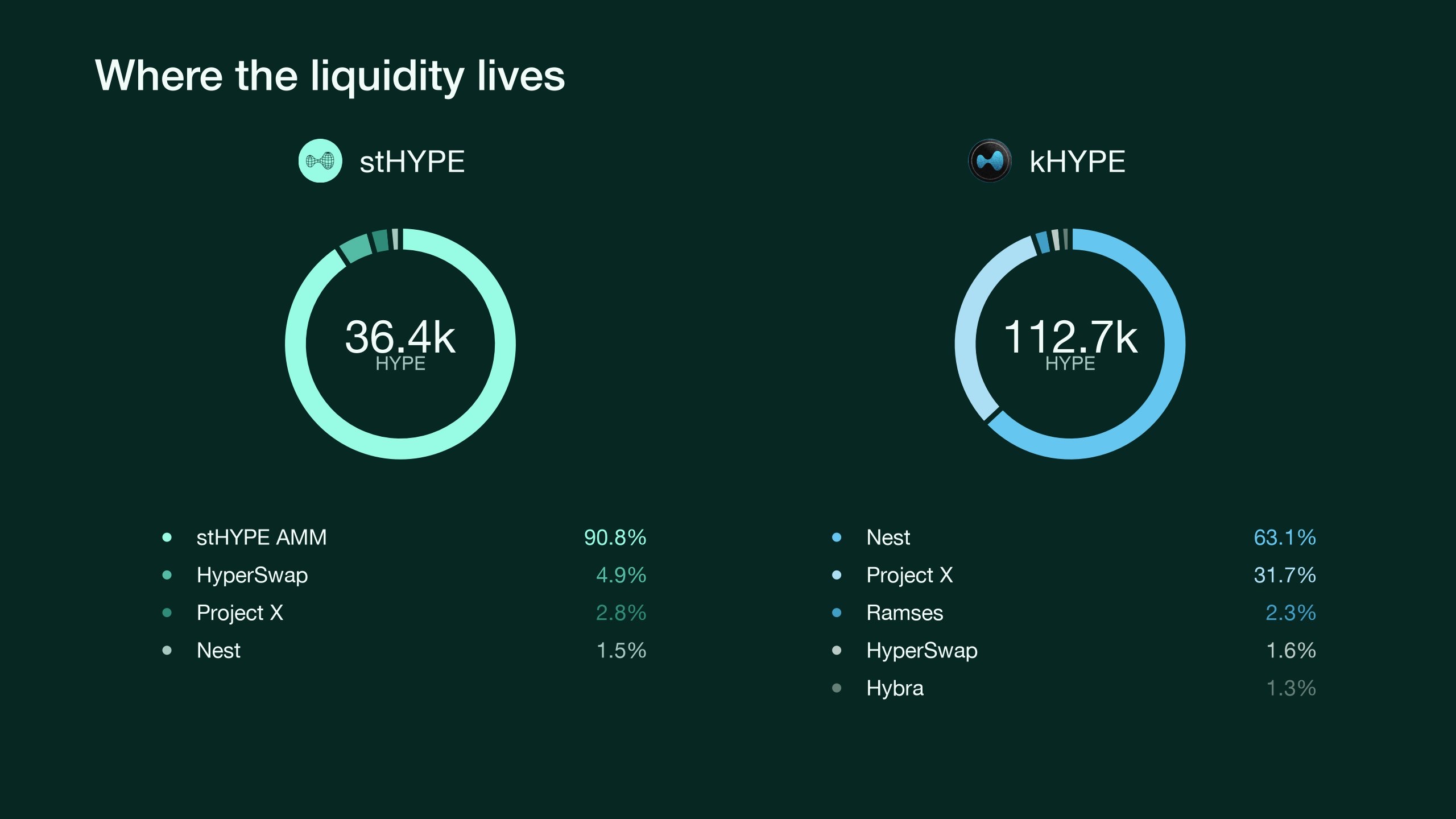
About 91% of stHYPE’s tracked liquidity sits in the stHYPE AMM. kHYPE’s largest venues are Nest and Project X. The kHYPE AMM, retired on 25 September, contributes nothing to these totals.
Compared with an internal analysis we ran in July 2025, prices are now well synchronized across HyperEVM DEX venues. That points to a maturing order flow and arbitrage landscape on HyperEVM, and it means users are generally getting the best available price.
stHYPE sees slightly larger price deviations across venues. During this study, we found that some aggregators may be routing volume incorrectly because they don’t account for stHYPE’s dual-token interface (stHYPE and wstHYPE). The effect is small, and arbitrageurs correct these deviations quickly.
STEX, Valantis’ proprietary AMM, has processed more than 8.8M HYPE all time. The swap curves show why its design matters: on 21 October, the median loss on a 10,000-token sale was about −0.10% for stHYPE and about −0.91% for kHYPE across the monitored routes.
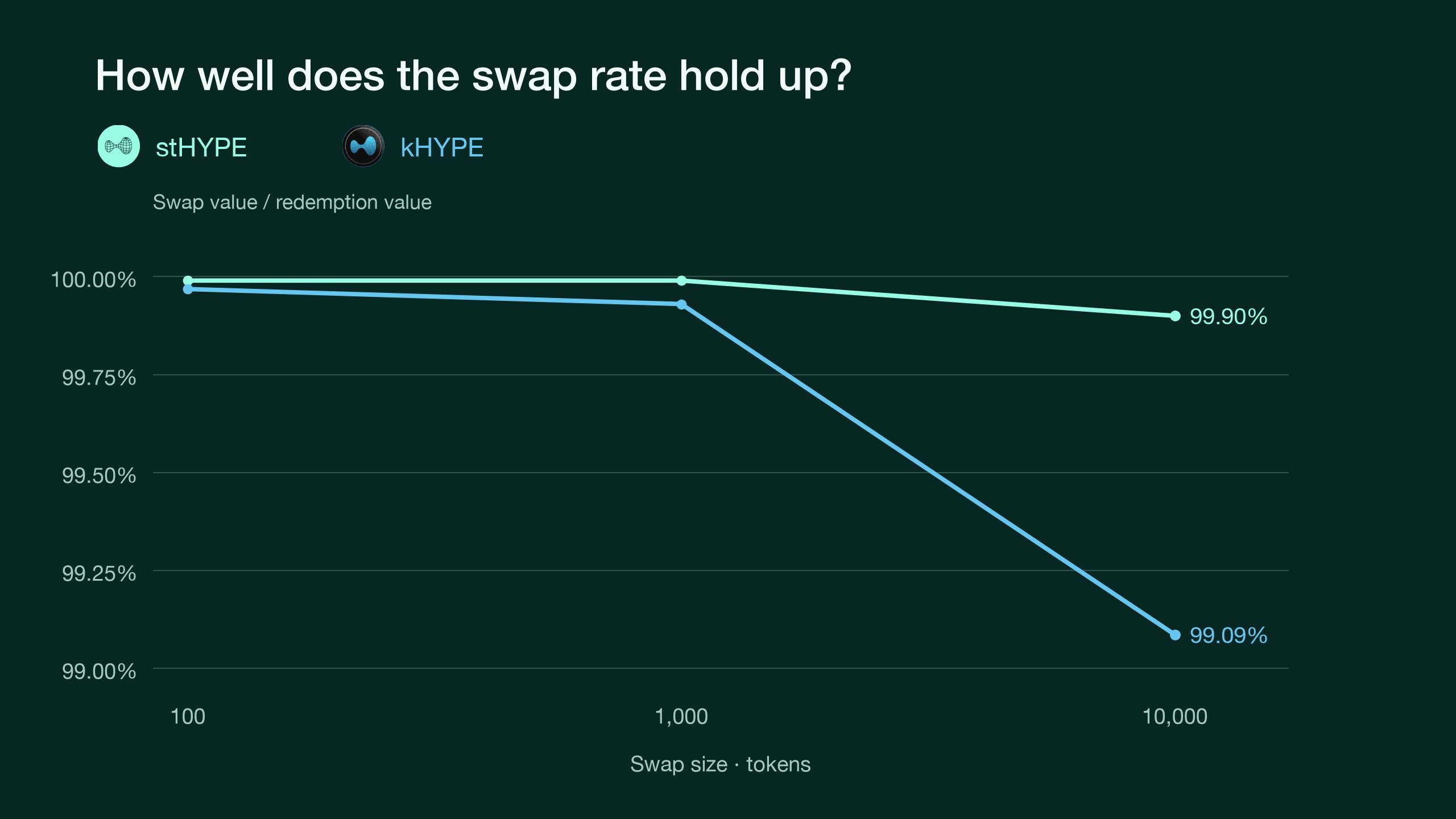
Concentrating liquidity for lower-slippage swaps is core to STEX’s design, and it gives better rates on sizable swaps than standard AMMs. This is where stHYPE’s liquidity advantage over kHYPE shows most.
What happens under stress?
stHYPE has had difficult periods, too. On 27 August 2026, its sampled discount reached 0.73%, substantially wider than kHYPE’s during the same episode. The cause was over-reliance on a single AMM that doesn’t follow traditional mechanics: STEX. STEX is designed to be maximally capital efficient, which means its liquidity can deplete.
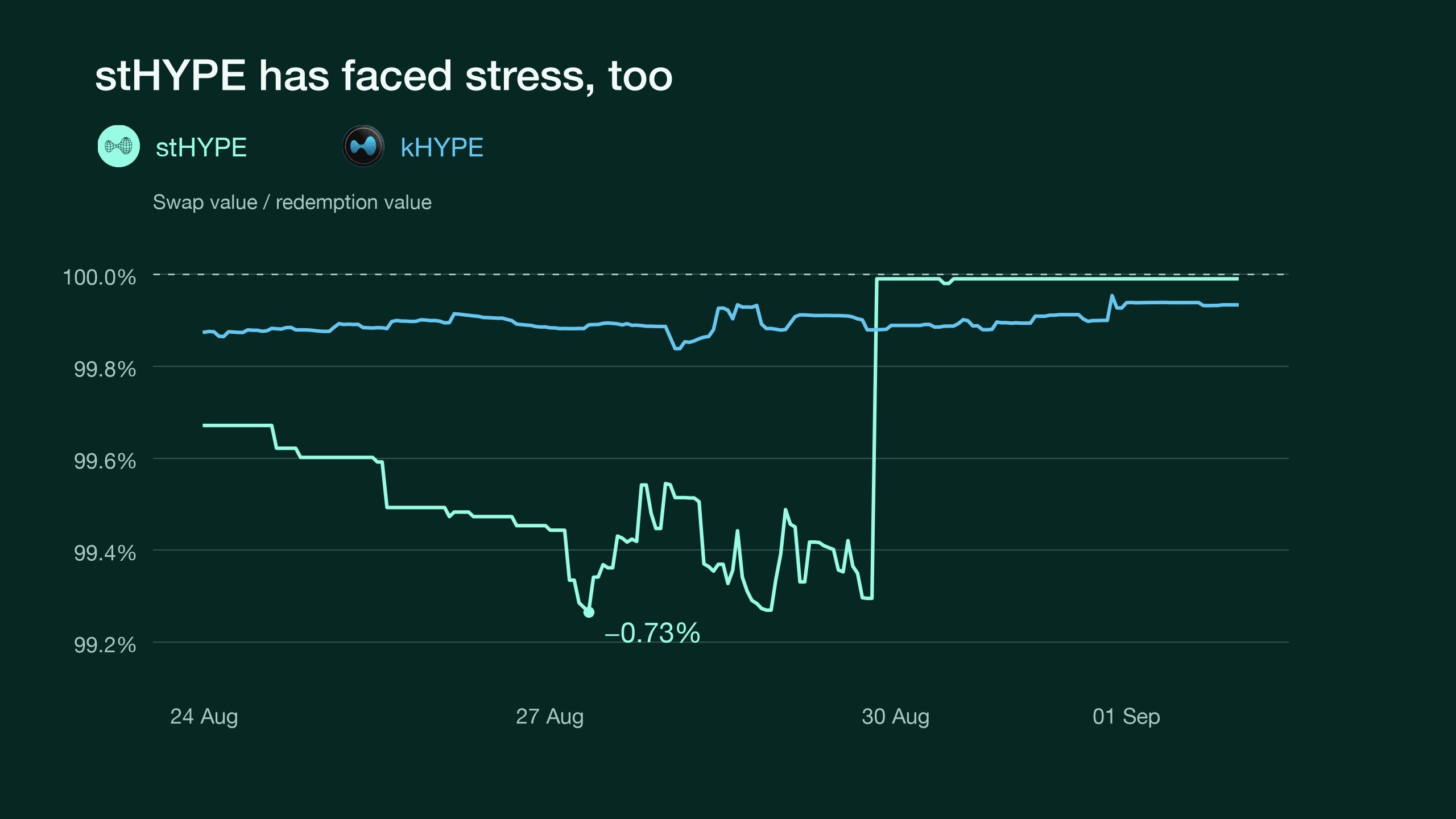
The recovery was quick. Once STEX finished turning over its liquidity, the peg was restored almost immediately. STEX’s APY rose during the episode as designed, and the arbitrage was internalized.
What has improved since
Faster withdrawals help replenish liquidity, and several protocol updates have shipped since the August stress event.
Median wait times for stHYPE withdrawals fell from 6.2 days in September to 3.6 days for requests made from 1 to 14 October, a 42% reduction.
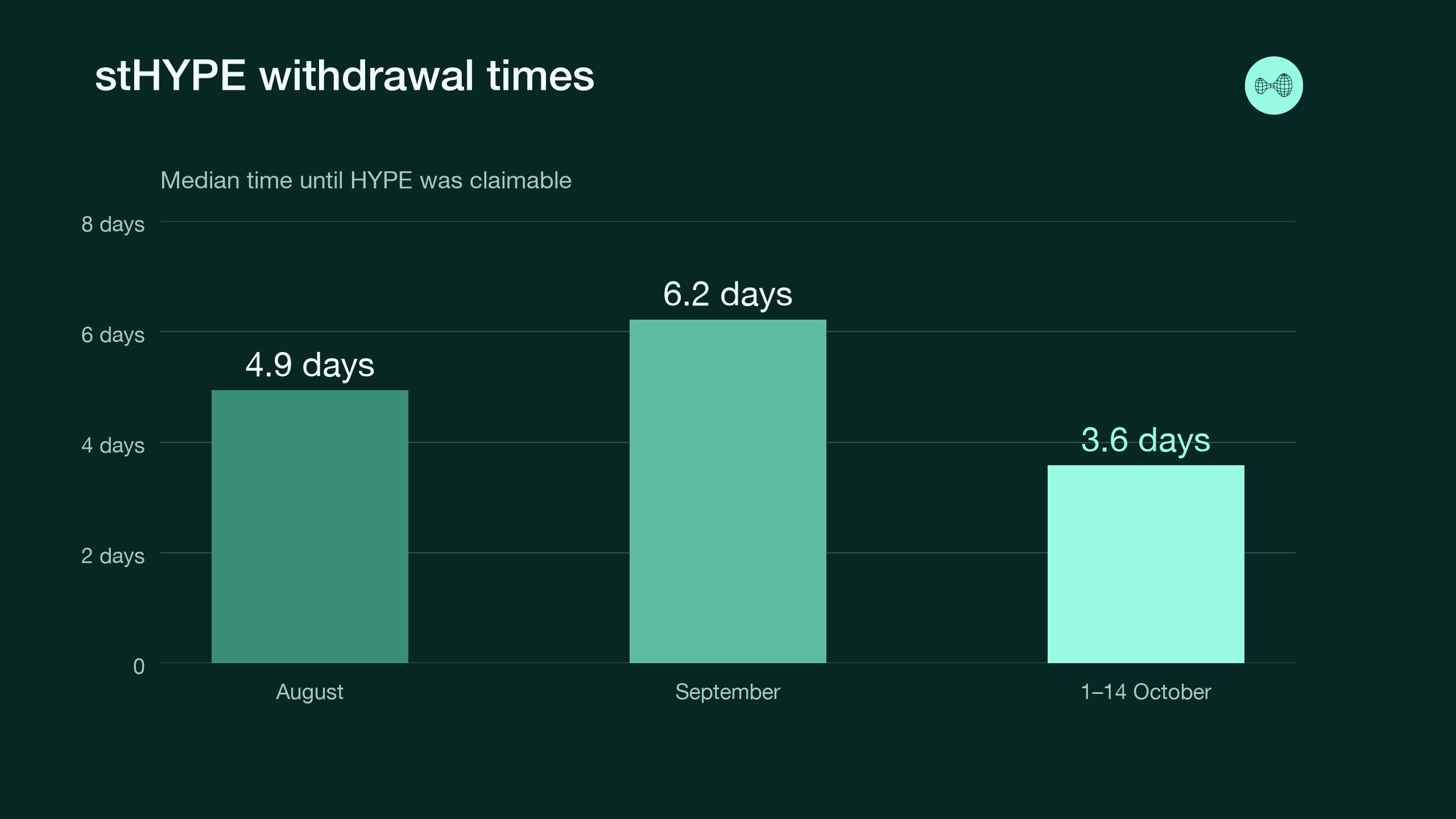
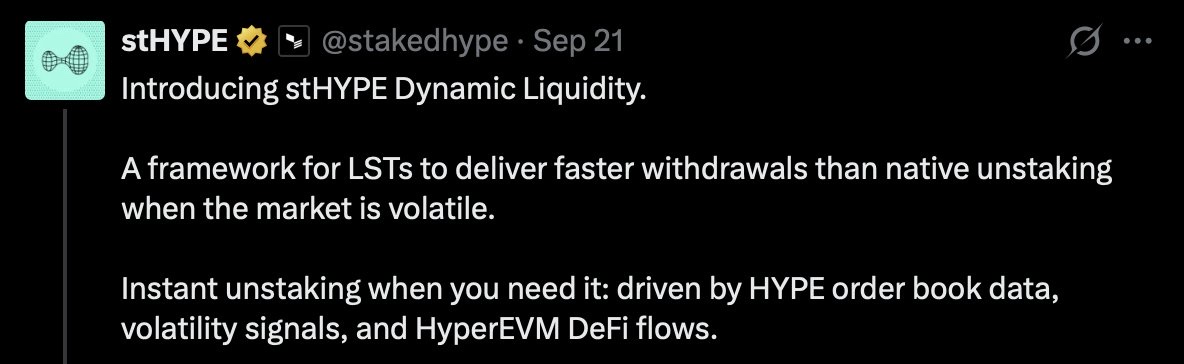
The latest improvement is Dynamic Liquidity, a protocol-level service that starts preparing liquidity from HyperCore ahead of large unwinds, based on market signals: HYPE price volatility and HyperEVM DeFi activity. stHYPE Protocol unstakes now happen faster when they matter most. The service is live in the stHYPE Protocol.
Related research
Originally published on X on 22 October 2026.